In 2024, Latin America will play a vital role in the world’s new green economy. Its geography and abundant natural resources, according to economic predictions, could make it a global leader in renewable energy by 2030.
This vast region that covers Mexico, Central and South America has enormous potential to develop and export advanced biofuels and low-emission hydrogen. Brazil, the green giant, leads the market with more than 86% of its electricity production coming from renewable sources, and smaller countries such as Panama and Costa Rica, who use almost 100% renewable energy to generate electricity.
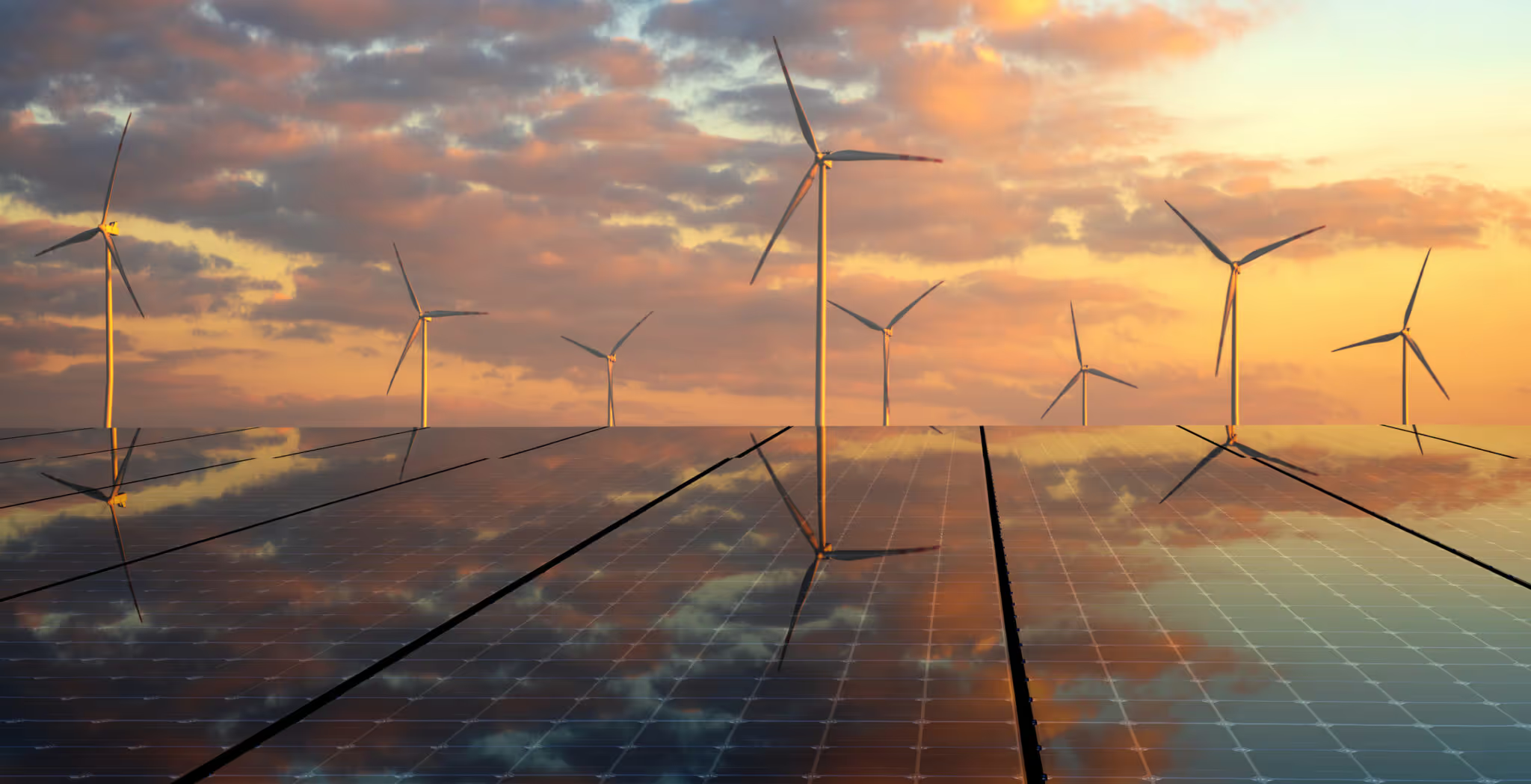
Brazil, Mexico, Chile, and Argentina also lead in developing solar photovoltaic and wind energy, and public-private investment in wind farms is growing throughout Latin America. In the future, it will be the region with the capacity to supply the world’s demand for hydrogen.
In hydroelectric power, one of the world’s largest dams is located on the border between Paraguay and Brazil. Others in South America already provide half of the electricity supply in their respective countries and hydroelectric projects have excellent growth prospects in the short term.
Along the same lines, Bioenergy is growing in importance. In the coming decade, South America will become a significant producer of hydrogen and low-cost, low-emission fuels, especially in Argentina, Brazil, Colombia, and Chile, where key projects have been announced.
Another aspect to highlight is the extraction of raw materials for sustainable energy alternatives. Chile and Argentina, together with Bolivia, are the second and fourth-largest lithium producers in the world, respectively. As for copper, Latin America accounts for 40% of world production, with significant extraction of other minerals such as graphite, nickel, and magnesium.
For investors interested in these markets, there are now national government regulations involving the public and private sectors and international cooperation agencies to invest in the economic and social development in México, Central and across South America.
Find here the 4 Energy trends that will shape LATAM in 2024
Conclusion
Latin America’s rich natural resources, growing renewable energy infrastructure, and commitment to sustainability position the region as a key player in the global green transition. With the right investments and policies, it has the potential to drive economic growth while leading the way toward a cleaner, more sustainable future.
.jpg)