Key Takeaways for Investors
- The Geological Clay Barrier: Unlike the liquid lithium brines found in Chile or Bolivia, Mexico's deposits are structurally bound to clay formations, which demand highly complex, energy-intensive, and unproven commercial processing technologies.
- Severe Institutional Underfunding: LitioMX operates under extreme resource constraints. Its budget dropped from a small 16 million pesos in 2024 to 13.9 million pesos in 2026, leaving zero allocations for exploration or capital investment for the third consecutive year.
- Definitive Geological Reclassification: In February 2026, the Servicio Geológico Mexicano (SGM) concluded after analyzing more than 3,000 samples across 18 states that no economically viable deposits exist to justify further exploration.
- The PEMEX "Petrolithium" Pivot: A viable alternative pathway is emerging through PEMEX’s 2025–2030 Strategic Plan, which explores lithium extraction from oilfield brines in five states, avoiding the complex clay problem entirely.
- USMCA Geopolitical Deadlines: The February 4, 2026, US-Mexico Action Plan on Critical Minerals and the upcoming July 1, 2026, USMCA joint review are placing heavy external pressure on Mexico to reform LitioMX's exclusive state monopoly.
When President Lopez Obrador created LitioMX on August 23, 2022, the framing was unambiguous: lithium was a strategic resource, too important to leave to foreign capital, destined to anchor Mexico's industrial future. The Sonora deposit was described as one of the largest in the world. Mexico would not repeat the mistakes of countries that exported raw commodities while others captured the value.
By 2024, LitioMX operated with 5 permanent and 9 temporary employees on a budget of roughly 16 million pesos. The 2026 allocation dropped further to 13.9 million pesos. For the third consecutive year, there is still no allocation for exploration or investment. Three years after its creation, Mexico has yet to produce commercial lithium.
What the geology shows
The harder problem is not institutional, it is geological. Between 2021 and 2022, the Servicio Geologico Mexicano (SGM, Mexico's national geological survey) analyzed more than 3,000 samples across 82 localities in 18 states. The conclusion, delivered by SGM Director Flor de Maria Harp Iturribarria at the February 12, 2026, morning press conference, was that Mexico's lithium should be classified as "scarce or practically non-existent." A June 2025 transparency request response from SGM was equally direct: no deposit with favorable conditions was identified to justify further exploration efforts.
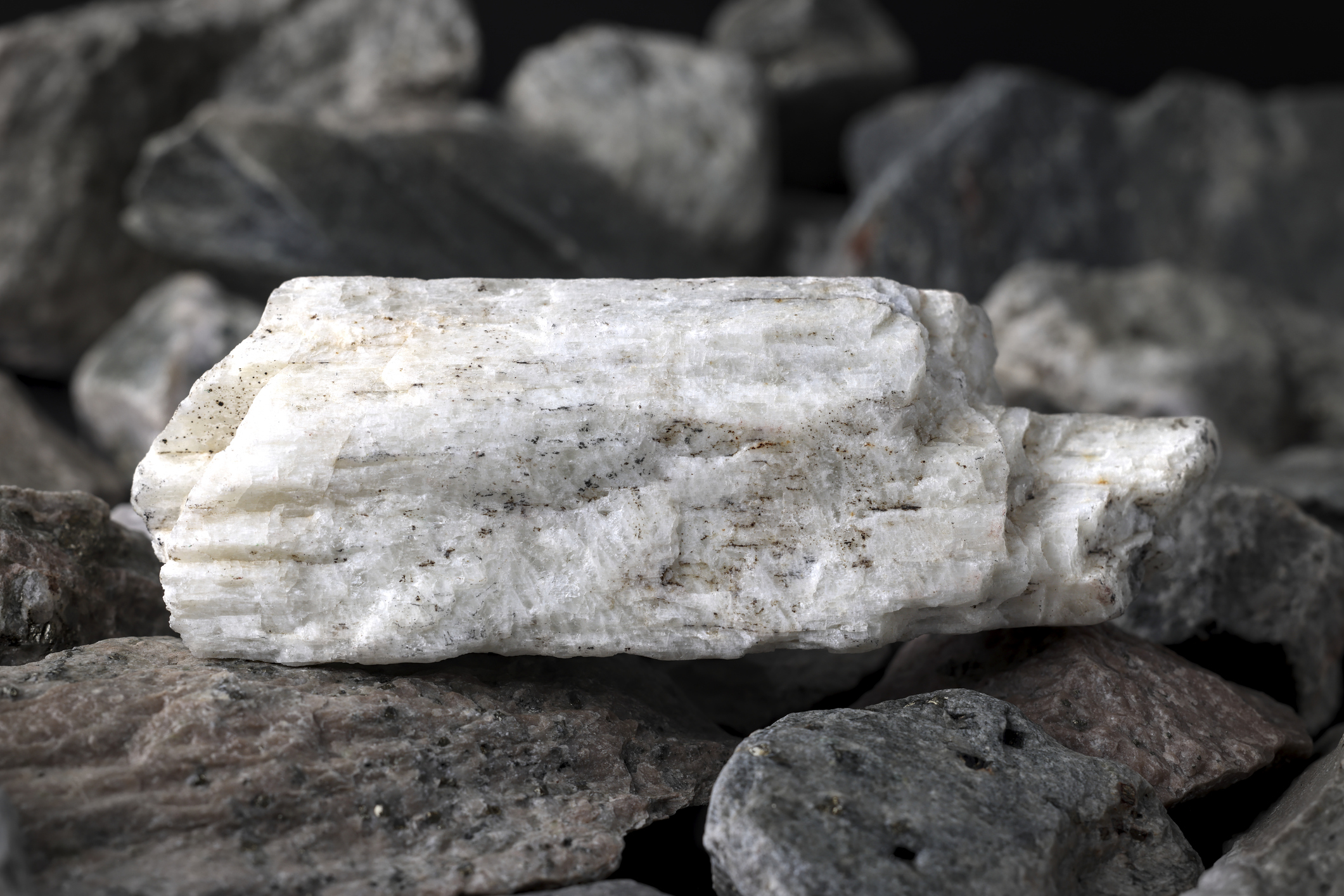
Mexico's lithium sits in clay formations, not the lithium-rich brines found in Chile or Bolivia's salt flats. Clay extraction is technologically harder, more energy-intensive, and economically less competitive at current lithium prices. The Sonora deposit averages 3,400 parts per million but is highly heterogeneous, which increases processing costs. Ganfeng Lithium, the Chinese company that held the majority stake in the Bacanora Sonora project, understood this better than most. After development stalled following the nationalization, Ganfeng filed ICSID arbitration (Case ARB/24/21) against Mexico, with Procedural Order No. 5 issued as recently as December 11, 2025. Sonora was the only project in Mexico with developed infrastructure. It has been idle since the dispute began.
The opportunity
Argentina right now is the clearest proof of a working industry and legal framework available. Under Javier Milei's Regime of Incentives for Large Investments (RIGI), lithium projects receive 30-year legal stability guarantees, VAT and export tax exemptions, and access to international dispute resolution. Ten lithium projects applied under RIGI with a combined investment of $14 billion. Eight new greenfield projects are expected to reach production by 2030, taking Argentina's output from 159,000 tonnes of lithium carbonate equivalent in 2026 to 409,000 tonnes by 2030 (a 157% increase in four years). Rio Tinto, Lake Resources, and Ganfeng have all committed capital. That last detail is worth sitting with: Ganfeng is simultaneously in arbitration against Mexico and scaling production in Argentina.
Chile's model is different but points in the same direction. SQM and Albemarle operate at scale in the Atacama under a structure where the state captures significant value (Codelco takes majority control from 2031) but private operators run production with investment certainty in the meantime. Chile refines nearly all its lithium domestically, building a value chain rather than just exporting raw material.
The paths that remain open
Mexico's near-term options are more limited but not closed. PEMEX's 2025-2030 Strategic Plan includes a "petrolithium" component—lithium extraction from oilfield brines in five states. Former CEO Victor Rodriguez has cited concentrations comparable to Bolivia. A PEMEX Lithium subsidiary is under consideration, with potential coordination with LitioMX. Although the technical and institutional hurdles are significant, oilfield brines avoid the clay problem entirely and could represent a genuinely viable path for Mexico if executed with the right partnerships.
The geopolitical calendar is also adding pressure. On February 4, 2026, the US and Mexico signed a joint Action Plan on Critical Minerals (USTR Ambassador Greer and Economy Minister Ebrard). The 2026 US National Trade Estimate Report explicitly flagged LitioMX's exclusive state control as a barrier to American investment, with the USMCA joint review set for July 1, 2026.
The question the public and private sectors must answer
The lithium question for Mexico was never really about reserves. The SGM data has made that much clear. The real question is whether Mexico can design a model that attracts the capital and technical expertise that clay-based extraction actually requires. The July USMCA review will not wait for the geology to improve. But it may be exactly the pressure that forces a more workable arrangement, one where the state sets the terms and specialized private capital does the work. That combination is not untested. Argentina built it in under two years.
FAQ: Mexico's Lithium Policy & Critical Mineral Risk
Q: Why has Mexico failed to produce commercial lithium despite nationalizing the resource?
A: Commercial production is stalled by severe financial and geological hurdles. Financially, LitioMX’s minimal budget lacks any funding for exploration. Geologically, Mexico's lithium is trapped in complex clay formations rather than easy-to-extract brines, requiring highly specialized private sector technology that the state cannot access independently.
Q: What do the official geological surveys say about Mexico's lithium reserves?
A: The Servicio Geológico Mexicano(SGM) analyzed over 3,000 samples across 82 localities and concluded in early 2026 that favorable geological conditions do not exist to justify further exploration, reclassifying the deposits as practically non-existent from an industrial standpoint.
Q: What is "petrolithium" and how could it rescue Mexico's lithium strategy?
A: Part of PEMEX’s 2025–2030 Strategic Plan, petrolithium refers to extracting lithium from oilfield brines across five Mexican states. This method bypasses the clay extraction issue entirely, offering a logistically and technically viable pathway if managed via a specialized subsidiary.
Q: How does the upcoming USMCA review impact national critical mineral policies?
A: The July 1, 2026, USMCA joint review increases pressure on Mexico. The U.S. National Trade Estimate Report has explicitly labeled LitioMX’s exclusive state monopoly as a barrier to American investment, making the resource a primary bargaining chip in broader bilateral trade negotiations.
Q: How can Speyside help your company navigate Mexico's evolving critical minerals landscape?
A: Speyside supports multinational companies by interpreting complex regulatory shifts and translating geopolitical signals into commercial strategy. We help clients monitor the upcoming USMCA review, map emerging alternative opportunities like PEMEX’s petrolithium projects, and build public affairs frameworks to engage safely and effectively with state entities while mitigating compliance and investment risks.
Conclusion
Mexico's lithium dilemma has shifted from a question of resource nationalism to a hard test of technical execution and international trade compliance. The state cannot unlock its clay-based reserves without the technology and immense capital that only specialized international private partners can provide. With the USMCA joint review looming and external trade partners explicitly flagging state control as an investment barrier, the current structural model is unsustainable. Success will require adopting a hybrid approach—similar to Argentina’s quick turnaround—where the state maintains oversight but relies on private capital to absorb operational risks and execute the extraction.
For more information please contact:
Silvia Ardila
Regional Director LATAM
Silvia.ardila@speyside-group.com