
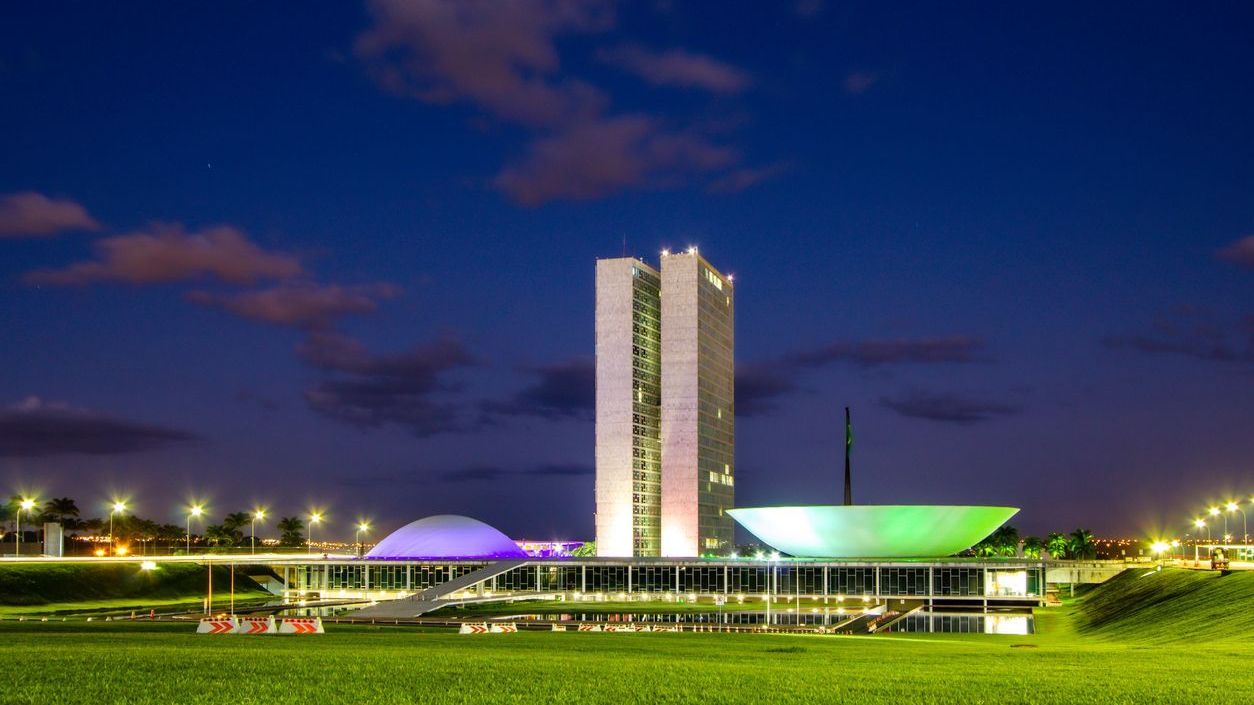
Most election coverage starts with who's going to be Brazil's next president. For companies on the ground in Brazil, that's probably not the right starting point anymore. The better question is what the presidency can actually do at this point.
Over the last decade, Brazil has shifted from a system centered on the Executive to something much more spread out. Congress now controls a growing chunk of the budget on its own terms, the Supreme Court has gotten a lot more involved in economic and regulatory fights, and the Central Bank runs entirely on its own calendar, separate from the president's. None of this makes the presidency unimportant. It just changes what the job is really for.
A Congress built to outlast any president
The clearest recent sign of this is budgetary. A string of constitutional changes since 2015 has pulled more and more federal spending out of the president's hands and into categories Congress controls directly. The shift is big: the share of the budget handled this way has grown roughly tenfold in ten years and now sits at close to a quarter of all discretionary federal spending.
Congress has also gotten bolder about overruling the Executive outright. When Brazil rewrote its environmental licensing rules in 2025, lawmakers reversed most of Lula's own vetoes over his objections, bringing back a more permissive version of the law. Whoever wins in October will be dealing with a Congress that has a lot more institutional muscle, and a lot less patience for presidential discretion, than any president faced twenty years ago.
Policies already out of the president's hands
Some of the decisions that matter most to companies in Brazil aren't really the president's call anymore, no matter who wins. The consumption tax overhaul, passed as a constitutional amendment, runs on its own legal timeline regardless of the election: a new federal tax kicks in fully in 2027, and a new state/municipal tax phases in gradually through 2033. And since 2021, the Central Bank has been formally independent, with leadership serving fixed terms that are staggered against the presidential calendar rather than tied to it.
Even here, execution still runs through the Executive, which the president heads, so how fast agencies staff up and how consistently rules get enforced still depends partly on who's in office. But that influence works within a framework Congress and the Constitution have already locked in, not around it.
That doesn't mean everything sails through smoothly once Congress takes the lead, either. The bill setting up Brazil's national policy on critical minerals passed the lower house in May but has been stuck in the Senate since, not because of ideological disagreement but because of a personal falling-out between the Senate president and Lula. The takeaway isn't that Congress always lands on business-friendly outcomes. It's that Congress, not the presidency, is now the one deciding the pace and fate of a lot of these debates.
Where the candidates actually differ
None of this makes Lula and Senator Flávio Bolsonaro interchangeable. Flávio's economic team, led by former Mines and Energy Minister Adolfo Sachsida, has floated pausing tax reform implementation for a year to revisit rules and exceptions, plus a bigger privatization push. If that happened, it wouldn't change the reform's overall path, but it could still cause some bumps along the way that matter for market expectations.
Lula's platform is basically a continuation of what his administration is already doing: sustained industrial policy, a sustainable finance taxonomy, and BNDES financing for strategic sectors, an approach critics point to alongside a tax burden that's climbed to a record 32.4% of GDP and public debt that's risen from around 72% to 80% of GDP during his current term.
These differences are real, and they show up in exactly this space: each administration would staff agencies, sequence priorities, and set a tone for markets differently. Neither candidate can single-handedly rewrite Brazil's tax calendar or reopen the Central Bank's mandate, but how each one runs the Executive in the meantime still isn't a minor thing.
FAQ
How much control does Brazil's Congress now have over the federal budget?
A substantial and growing share. Constitutional changes since 2015 have moved federal spending into categories Congress controls directly, with that share increasing roughly tenfold over ten years to approach a quarter of all discretionary federal spending.
Is Brazil's Central Bank independent from the presidency?
Yes. The Central Bank has operated with formal independence since 2021, and its leadership serves fixed terms staggered against the presidential calendar rather than aligned with it.
Why is Brazil's critical minerals bill stalled in the Senate?
The bill passed the lower house in May but has since stalled in the Senate because of a personal falling-out between the Senate president and Lula, not ideological disagreement. This illustrates how legislative pace in Brazil can now depend as much on political relationships as on policy substance.
How can Speyside Group help companies navigate Brazil's shifting political and regulatory landscape?
Speyside Group advises multinational corporations and investors on how to sequence market entry, engagement, and risk management as Brazil's institutional balance of power continues to shift toward Congress, the judiciary, and the Central Bank. Speyside Group's regional teams track legislative timelines, agency execution capacity, and political relationships that shape implementation, providing clients with the intelligence needed to plan around fixed regulatory calendars rather than election cycles. This includes stakeholder mapping in Congress, monitoring of sector-specific legislation, and guidance on how administration changes affect execution risk within an already-defined policy framework.
References:
- CONGRESSO EM FOCO. As emendas e o poder: 79 anos de disputa pelo orçamento. 2025. Disponível em: https://www.congressoemfoco.com.br/noticia/108229/as-emendas-e-o-poder-79-anos-de-disputa-pelo-orcamento
- AGENCIA BRASIL. Entenda o debate sobre emendas parlamentares e Orçamento. 2024. Disponível em: https://agenciabrasil.ebc.com.br/politica/noticia/2024-08/entenda-o-debate-sobre-emendas-parlamentares-e-orcamento
- REVISTA FORUM. Como o Congresso capturou o Orçamento e mudou a política brasileira. 2025. Disponível em: https://revistaforum.com.br/blogs/pontaesquerda/2025/9/25/como-congresso-capturou-oramento-mudou-politica-brasileira-188525.html
- CAMARA DOS DEPUTADOS. Lula sanciona novo licenciamento ambiental com 63 vetos. 2025. Disponível em: https://www.camara.leg.br/noticias/1186832-lula-sanciona-novo-licenciamento-ambiental-com-63-vetos/
- PODER360. Reforma tributária: saiba como será o cronograma até 2033. 2026. Disponível em: https://www.poder360.com.br/poder-economia/reforma-tributaria-saiba-como-sera-o-cronograma-ate-2033/
- CONJUR. STF declara constitucional lei que definiu autonomia do Banco Central. 2021. Disponível em: https://www.conjur.com.br/2021-ago-26/stf-maioria-considerar-constitucional-autonomia-bc/
- SOCIOAMBIENTAL. Câmara aprova projeto de lei sobre terras raras sem salvaguardas. 2026. Disponível em: https://www.socioambiental.org/noticias-socioambientais/camara-aprova-projeto-de-lei-sobre-terras-raras-sem-salvaguardas
- BRASIL 247. PL dos minerais críticos trava no Senado. 2026. Disponível em: https://www.brasil247.com/brasilia/pl-dos-minerais-criticos-trava-no-senado/
- JORNAL DE BRASILIA. Em meio a caso Dark Horse, ex-ministro de Bolsonaro traça plano econômico para Flávio. 2026. Disponível em: https://jornaldebrasilia.com.br/noticias/politica-e-poder/em-meio-a-caso-dark-horse-ex-ministro-de-bolsonaro-traca-plano-economico-para-flavio/
- CNN BRASIL. Vamos suspender por um ano a entrada em vigor da reforma tributária, diz Flávio Bolsonaro. 2026. Disponível em: https://www.cnnbrasil.com.br/economia/macroeconomia/vamos-suspender-por-um-ano-a-entrada-em-vigor-da-reforma-tributaria-diz-flavio-bolsonaro/
Conclusion
Brazil's 2026 election still matters, just not quite the way past presidential elections did. The key question isn't who reaches the Planalto Palace anymore. It's who can coordinate an increasingly fragmented power structure while still running the Executive branch that keeps shaping how policy actually plays out. For businesses, that makes institutional capacity just as useful a lens as ideology when sizing up political risk. Speyside works with clients to map that distinction sector by sector, identifying where regulatory outcomes are already locked in and where they still hinge on the election, so clients can plan around the risks that are actually in play well ahead of the vote.
For more information please contact:
Silvia Ardila
Regional Director LATAM
Silvia.ardila@speyside-group.com