
President Trump’s return to the White House has triggered a global bout of government’s reassessing their relationship with the United States. Both allies and opponents are struggling to parse his statements, assess his true priorities and develop a strategy to engage with the United States while protecting their core interests.
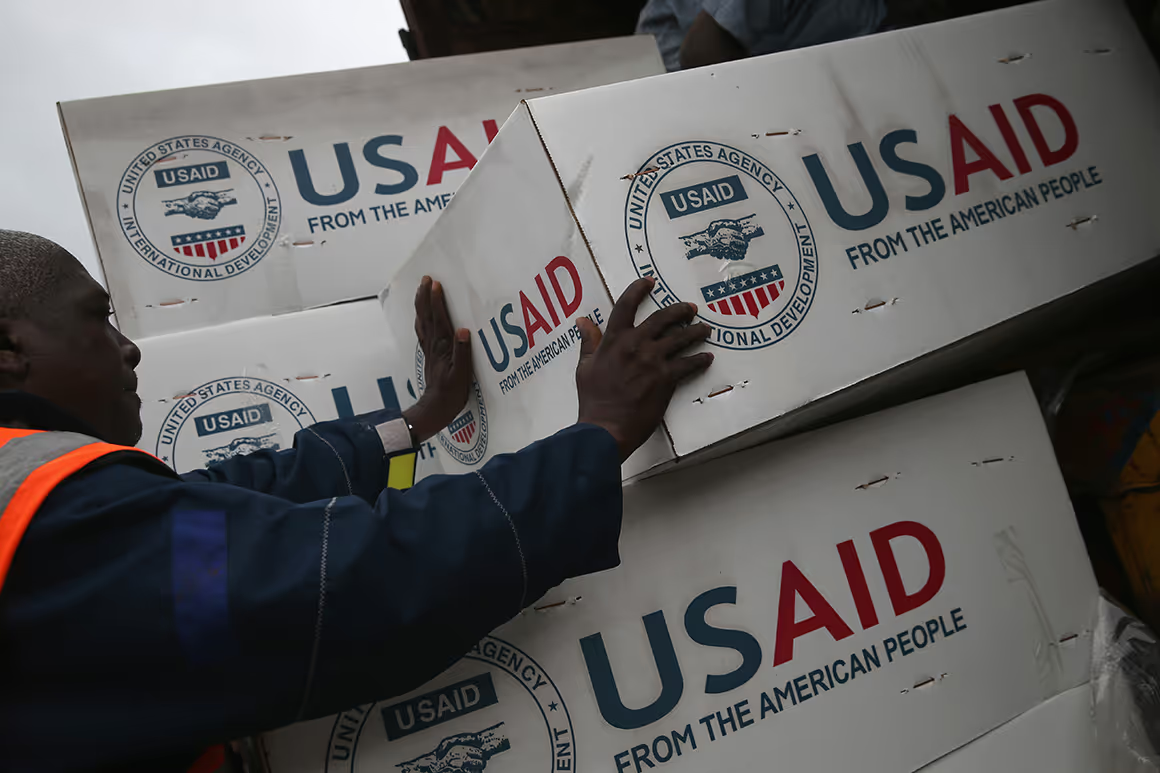
The implications of Trump’s presidency for Africa, while less widely discussed in media, are equally important. Already, African countries have been among those most impacted by the president’s flurry of executive orders. The recent decision to pause overseas aid programs for 90 days to assess their alignment with the president’s priorities will at the very least mean that billions of dollars in aid are disrupted – to illustrate the scale, in 2023, the US disbursed $72 billion in foreign assistance.
Aside from the tremendous potential human impact, a longer-term curtailment of aid will have a direct impact on fiscal policy for some US partners. Already in Kenya, which faces a significant fiscal crunch, there are discussions about what cuts to government programs and tax measures might be needed in the 2025 Finance Bill (scheduled for May/June) to mitigate the impact of US funding reductions.
Under the Biden administration, Africa was low on the list of foreign policy priorities, though there was some action recognising of the continent’s growing strategic and economic importance. That shift was highlighted by strengthening of partnerships with countries such as Kenya, and the development of a logistics corridor to transport strategic minerals such as copper, lithium and cobalt from the DRC and Zambia to the Port of Lobito in Angola – a first step in reducing China’s overwhelming advantage in access to unprocessed critical minerals.
President Trump’s policies in his first term may offer some hint of what is to come. While Africa was certainly not among his foreign policy priorities, the administration did release a strategy in 2018, revolving around competition with China and to a lesser extent, Russia, and tasking aid programs to also support growth of US commercial interests.
Based on the precedent, it seems likely that the new administration will view Africa through a limited prism of ad hoc competition and commercial opportunity. In 2025, an immediate test will be whether Congress renews the African Growth and Opportunity Act (AGOA), a centrepiece of the United States’s economic engagement with Africa that provides duty free access to the US for around 1,800 products.
African leaders seem to be relatively sanguine or even optimistic. In many cases there is a sense that a more pragmatic and transactional approach may benefit their countries. While this may support further bilateral agreements, there currently seems to be limited potential for a step-change approach that would significantly increase US engagement in Africa.
What does this mean for business?
On the current trajectory, there is little indication of a changed US approach to relations in Africa that would yield a paradigm shift for US companies on the continent. However, the focus on bilateral agreements and a shift towards aligning aid with broader policy and commercial priorities may yield strategic opportunities – it will be essential for businesses to monitor where these opportunities emerge over the next four years.
More broadly, we should expect to see continued diversification of global commercial and strategic engagement in Africa. While China continues to play the leading role as an international investor, Gulf states have rapidly expanded their interests in the continent, while EU members play a significant role in policy development and aid. Africa’s strategic and commercial importance continues to increase, but we will likely see a new cast of investors increasingly leading the way.
Conclusion
Trump’s return likely signals a narrower, more transactional U.S. approach to Africa, centered on competition and business interests rather than development. While this could open selective opportunities, Africa's growing global importance means other players will likely drive deeper, long-term engagement. Businesses should watch for emerging bilateral deals and shifts in aid-linked projects.


